CAPTAN12
Explore Our Tech
Explore Our Tech
to transform your business



Narrow Band Dielectric Frequency Response (NB DFR) and Line Frequency Dissipation Factor (LF DF) are techniques for assessing dielectric properties, each with unique advantages. LF DF testing at line frequency (50 or 60 Hz) is simple and detects general insulation degradation, but it lacks detailed insights into specific issues like moisture or contamination. NB DFR, however, measures dissipation factor across multiple frequencies (1 Hz to 500 Hz), giving a deeperview of insulation health and detecting early-stage problems that LF DF might miss. This broader frequency approach makes NB DFRmore effective for proactive maintenance and risk assessment in electrical systems.
Narrow Band Dielectric Frequency Response (NB DFR) and Line Frequency Dissipation Factor (LF DF) are techniques for assessing dielectric properties, each with unique advantages. LF DF testing at line frequency (50 or 60 Hz) is simple and detects general insulation degradation, but it lacks detailed insights into specific issues like moisture or contamination. NB DFR, however, measures dissipation factor across multiple frequencies (1 Hz to 500 Hz), giving a deeper
view of insulation health and detecting early-stage problems that LF DF might miss. This broader frequency approach makes NB DFR
more effective for proactive maintenance and risk assessment in electrical systems.
| Brand | Wisegrid Energy (USA) |
|---|---|
| Category | Transformer Tester |
| Max voltage | 12kV |
| Max current | 300mA |
| Frequency range | 1 – 500 Hz |
| Tan Delta (Power factor) measurement | ±0.005% |
| Capacitance measurement | ±0.05% |
| Output Voltage | 50 ... 12000 V RMS @ 45 ... 75 Hz |
| Output Voltage Frequency | 10 ... 400 Hz (Voltage < 5kV)* |
| Maximum Test Object Capacitance | -Max. 80 nF@12kV RMS, 50 Hz -Max. 66 nF @ 12kV RMS, 60Hz |
| Maximum Measuring Current | 5 A RMS |
| Number of Inputs | 2 (Input A and Input B) |

MTEKPRO Technologies is now an official
Authorized Calibration Center of HIKMICRO Camera
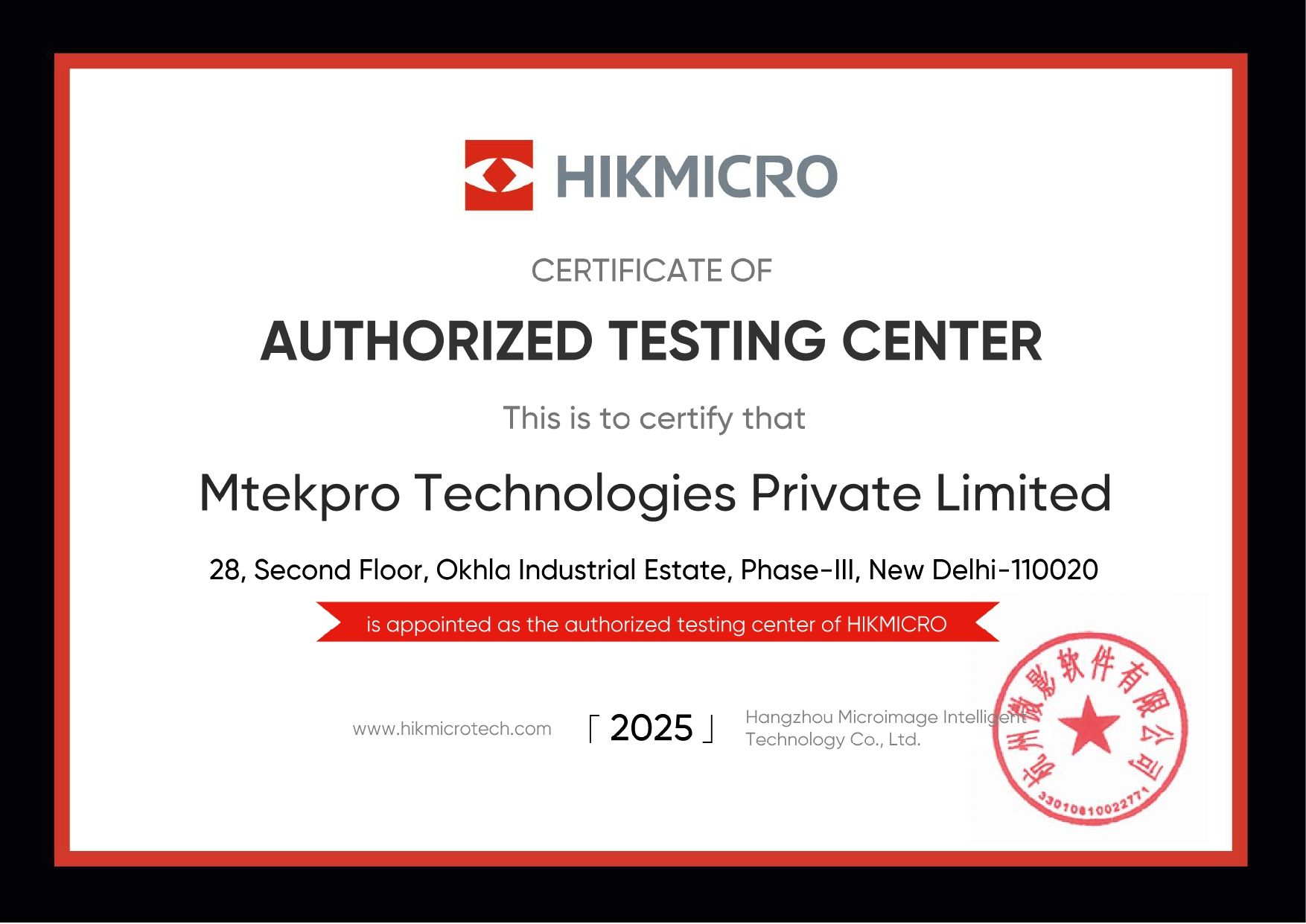
Enquire now to get more information about
HIKMICRO Thermal Imaging Camera Testing Services.